
How to Turn Client Questions Into a Digital Product

Updated: Sep 3
The questions clients ask you repeatedly are not interruptions. They are evidence of what people need help understanding, deciding, or doing. When the same problem keeps appearing, you may already have the foundation for a useful digital product.
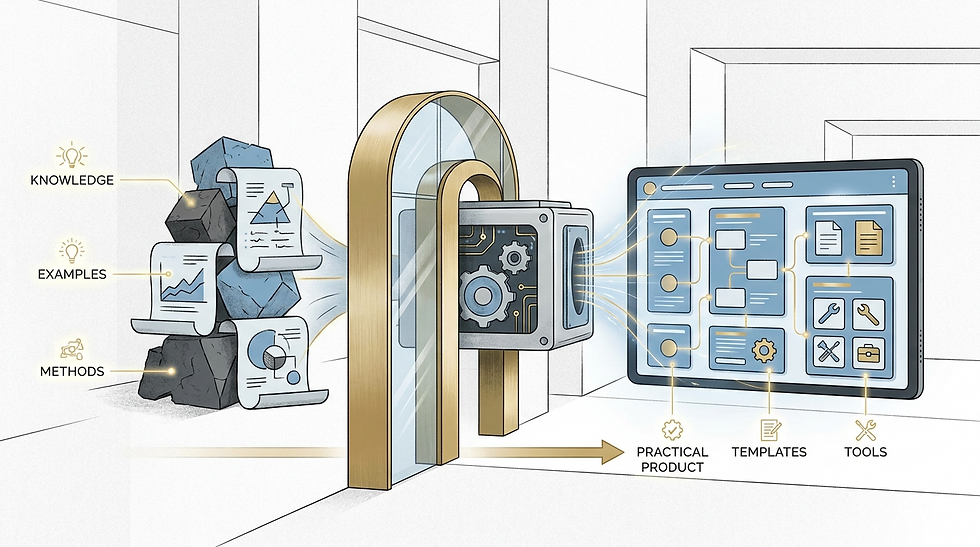
You can turn client questions into a digital product without inventing a brand-new topic. The goal is to identify a clear pattern, organize your answer into a repeatable path, and package that path in a format people can use independently.

Why Repeated Questions Are Valuable Product Research
Every repeated question gives you information about demand. It shows where people feel confused, what they are trying to accomplish, and which part of the process feels hardest. That makes your existing conversations a practical source of product ideas.
A question becomes especially useful when it appears across several clients, comments, emails, or consultations. One question may be a special case. A pattern usually points to a broader problem worth solving.
How to Turn Client Questions Into a Digital Product
Start by collecting the questions you have answered during the last three to six months. Review consultation notes, direct messages, email replies, comments, and support conversations. Write each question in the customer's own language instead of rewriting it into industry terminology.
Next, group similar questions together. A consultant may notice that clients keep asking how to choose an offer, price it, and explain it clearly. Those questions belong to one larger outcome: creating a marketable offer.
Choose One Specific Outcome
A strong digital product should help the buyer reach one recognizable result. Avoid combining every question you can answer into one oversized resource. Select the cluster with the clearest audience, strongest urgency, and most practical outcome.
The outcome should be specific enough for the buyer to recognize progress. Helping someone organize a service offer is clearer than helping someone improve their business. A focused promise also makes the product easier to explain and complete.
Build the Product Around Decisions, Not Information
People rarely need more disconnected information. They need help knowing what to do first, what to choose, and how to avoid common mistakes. Organize the product around the decisions the buyer must make to move forward.
For each question, identify the action that follows the answer. Add a worksheet, checklist, prompt, example, or decision guide that helps the buyer apply what they learned. This turns your expertise into a tool instead of a long explanation.
Choose the Simplest Useful Format
The right format depends on the problem. A short guide works well when the buyer needs context and a clear sequence. A template is better when the buyer needs to produce something, while a checklist works when accuracy and consistency matter most.
Do not choose a complicated format just to make the product feel more valuable. A focused twenty-page guide that solves one problem can be more useful than a large course that overwhelms the buyer. Value comes from clarity, relevance, and application.
Test the Product Before Expanding It
Create a simple first version and share it with a small group of people who match the intended audience. Ask them where they hesitated, what felt unclear, and which section helped them make progress. Their feedback will show you what to clarify or remove.
Pay attention to the questions they still ask after using the product. Those questions reveal missing explanations, examples, or tools. Improve the product based on actual use instead of adding content based on assumptions.
A Practical Question-to-Product Checklist
Collect repeated questions in the customer's words. Group them by the outcome the person is trying to achieve. Choose one focused problem, map the decisions required, and add tools that help the buyer take action.
Then select the simplest useful format, test a small version, and refine it from feedback. This process allows you to build from proven demand while keeping the product focused and practical.
Turn Existing Conversations Into a Useful Asset
Your next digital product idea may already be present in the questions you answer every week. When you study those questions carefully, you can see what your audience values and where your knowledge creates the most useful transformation.
The result is not just another piece of content. It is a structured resource that delivers your best answer consistently, helps more people, and creates a clear next step beyond one-to-one support.
Ready to organize your expertise into a practical digital product? Explore Create & Cash In.
Keep Reading
Ready to turn this into a real digital product? Create & Cash In gives you a focused path from idea to finished offer.


Comments